House Construction Questions

I am not an engineer, but that kind of shallow foundation and footing is only suitable for sand soil. I know this, because in the Netherlands millions of houses built on peat soil are at risk because of the groundwater sinks and the wooden foundation piles rot away. Only those houses build on sand soil in The Netherlands are safe. Ask an soil engineer for
I would expect that the developer should arrange the soil test first before they can sale any project. It's part of the procedure.
If the land is not from a developer, yes, I think it's wise to pay soil test by ourselves. It's around Rp1.500.000,00 - Rp3.000.000,00 per point (exact point on the site where the soil is conducted). That's why Indonesian people mostly opt it out.
 
Australian building code is for houses in desert where the temperature is 60 degrees. Little bit over the top for Indonesia (European or US materials are more appropriate probably). Also many poliurethane aluminum layered insulation foils if you want more insulation.

You couldn't be more wrong. Australia has various climates, the weather in, for instance, the southern parts of West Australia is very different from Northern Territory (which is more humid like Indonesia). Then you've got places like Tanzania that are also pretty chill. As such the building code of Australia accounts for these different climates with different rules depending on the region.

Those places with over 50 degrees in desert have very little population actually and don't make a big impact on the building materials used throughout the country.
 
You couldn't be more wrong. Australia has various climates, the weather in, for instance, the southern parts of West Australia is very different from Northern Territory (which is more humid like Indonesia). Then you've got places like Tanzania that are also pretty chill. As such the building code of Australia accounts for these different climates with different rules depending on the region.

Those places with over 50 degrees in desert have very little population actually and don't make a big impact on the building materials used throughout the country.
Australians are making houses from bondor to protect themselves from heat.
 
My experience is that the pipes are full of sand, mortar, nails and such.
True. We went for a regular check up on a house of a client. I saw a worker threw away plastic bag (with plastic straw and rubber elastic as bonuses) from where he had drunk up his ice tea into the toilet. When I asked why he did that, the answer was: Yaaah... sudah biasalah Bu (that's just normal, mam). 😱😭
 
Also many poliurethane aluminum layered insulation foils if you want more insulation.
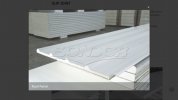
Interesting. This company in Indonesia has ready-to-use bondor roofing panels. However check the lifespan of these PUR-panels (in humid climate) before buying.


See video ... "ada PT. Bondor di Indonesia":
 

Attachments

  • PIR foam block.jpg
    PIR foam block.jpg
    64.2 KB · Views: 178
  • Bondor_roof_panel.jpg
    Bondor_roof_panel.jpg
    46.9 KB · Views: 194
  • Bondor_roof_panel_slip joint.jpg
    Bondor_roof_panel_slip joint.jpg
    59.3 KB · Views: 168
Last edited:
Interesting. This company in Indonesia has ready-to-use bondor roofing panels. However check the lifespan of these PUR-panels (in humid climate) before buying.


See video ... "ada PT. Bondor di Indonesia":
Bondor is Australian company, so I suppose hot/humid no problem for lifespan. In Indonesia they produce only roofs and panels-XPS and EPS, muc less range of products that being sold in Australia.
 
Last edited:
Yes, bases on my experience. If I need to soundproof a wall or a roof in Indonesia, I would somehow try to use safety glass panels. Double glass is the best soundproof material by far.
Now, this is what I am talking about. See video on FB.


soil test …... It's around Rp1.500.000,00 - Rp3.000.000,00 per point (exact point on the site where the soil is conducted). That's why Indonesian people mostly opt it out.

Those are the high end prices. But yes people are stingy and an IMB process does not properly check all necessary documents anyway.

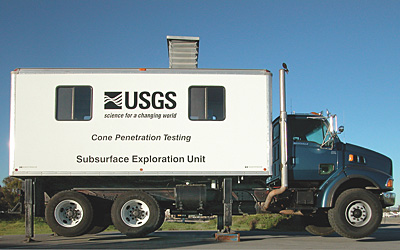
Btw, here* is a rather good explanation about what it is/includes and how it is executed:


And how a local company executes the tests:


* boring is obviously taken from Dutch. Many people don’t seem to know that word anymore; that’s how Elon got the idea for the name for his tunnel digging company (in his case probably out of South African).
 
Thinking about it, sondir is also from Dutch, sonderen (sondering) means to investigate by drilling holes it the matter, measuring the depth and resistance, and taking samples. Probably originates from French to measure the depth (of water).

Anyway, this is the explanation of a CPT in English:
 
Those are the high end prices. But yes people are stingy and an IMB process does not properly check all necessary documents anyway.
IMB process is now replaced with PBG which is quite intensive and comprehensive. . We have to submit all detail engineering document including soil test, structure calculation, plumbing and HVAC, electrical load and wiring diagram, lighting plans, environment impact analysis report, etc produced by licensed/certified architecture, civil, and MEP engineer - then reviewed via online meeting with team of experts (Prof and Phd) from university. We also have to present all the engineers who produced those doc. Some people told me that what they asked to us is too much and might not necessary for a residential building in the middle of paddy field. Anyway, We follow all procedure though I can understand if many people dont and or simply ignore it.
 
IMB process is now replaced with PBG which is quite intensive and comprehensive. . We have to submit all detail engineering document including soil test, structure calculation, plumbing and HVAC, electrical load and wiring diagram, lighting plans, environment impact analysis report, etc produced by licensed/certified architecture, civil, and MEP engineer - then reviewed via online meeting with team of experts (Prof and Phd) from university. We also have to present all the engineers who produced those doc. Some people told me that what they asked to us is too much and might not necessary for a residential building in the middle of paddy field. Anyway, We follow all procedure though I can understand if many people dont and or simply ignore it.
That's overkilled indeed. Is it possible you are asked for it because the building floor coefficient is far greater, or the height of the building higher than the other houses in that area?
I remember years ago when the local government of Bali set the "height of palm/coconut tree" as the maximum height of building allowed. Hotel owners simply made terrasering/sloping garden next to their building to fulfill this requirement. Is this restriction still applied in Bali today?
 
That's overkilled indeed. Is it possible you are asked for it because the building floor coefficient is far greater, or the height of the building higher than the other houses in that area?
I remember years ago when the local government of Bali set the "height of palm/coconut tree" as the maximum height of building allowed. Hotel owners simply made terrasering/sloping garden next to their building to fulfill this requirement. Is this restriction still applied in Bali today?
The building coefficient is 5% only, 2-storey building with rooftop. The restriction of coconut tree threshold is no longer applicable; instead max. 15m height.
The requirement to submit detail engineering document is mandatory to upload online via SIMG (Sistem Informasi Manajemen Bangunan Gedung - Building Management Information System. However, for residential building, only the architect who must have a license from a professional organization. For us, they ask the structure and MEP engineer shall be licensed by professional organization. When we challenged, the "expert team" during the meeting, they assume our building is not "simple" house since we are using steel structures and the roof all covered with solar panels. No big deal but extra cost to get additional two licensed engineers to review and sign the document.
 
Thanks for all of the replies. We're looking at a number of new structures within various 'Kompleks rumah minimalis' where, as you know, the construction is similar to this video . I assume that the developer of the kompleks would have the approval of local authorities when applying for the work.

BUT: it's the structural integrity of the rebar that still worries me. Not being an engineer, the act of casting the concrete on site (versus using precast reinforced concrete or steel beams) seems to be much less sound...but, as I wrote, I'm not an engineer.

Thanks again - if/when I learn anything from these developers I'll post the information to this thread.
Put insulated sarking (fibreglass insulwool lined foil) under those roof sheets or you'll be sorry.
I didn't see any flashing on the roof either, where the roof sheets butt up to the brickwork. Without it, that'll leak there for sure.
Make sure to use BONDCRETE, where those concrete cold joins are. Generally, a concrete beam or support shouldn't have any cold joints and should be formed up and poured in one go unless it's especially impossible to do so, not because of inconvenience. In that video, they have about ten separate pours to complete each support. That's terrible. Just because that's how they do it doesn't make it right.
I'd also use cold gal paint to coat all steel reinforcement 4" above and below where there'll be any cold joints in that concrete. The beams will have hairline cracks on all those cold joints, thus letting in moisture to the steel inside the concrete. The steel inside will bleed out rust stains through your finished paintwork. That not only looks ugly, but you'll never get rid of it either, and the strength of the concrete is greatly compromised.
There are heaps more I'd do, too, but I'd be writing a novel. Good luck.
Please don't scrimp on the 1st sealer coat of paint on the bare cement render. Buy Dulux,
 
Last edited:
put insulated sarking under those roof sheets or you'll be sorry, and i didn't see any flashing on the roof where the roof sheets butt-up to the brickwork, that'll leak there for sure. Make sure to use concrete where those concrete cold joins are, and I'd be using cold gal paint as well on all steel where there'll be any cold joints in the concrete, as the beams will have hairline cracks letting in moisture and the steel inside will bleed out rust stains through your finished paintwork . There is heaps more id do too , but id be writing a novel .., good luck .., ps don't scrimp on the 1st sealer coat of paint that goes on the bare cement render. Buy dulux
All good points. The last about 1st. Sealer coat of paint is crucial. The hotel I stayed in Padang Bai didn't do this, and within six months, black spots, and bubbles started, and the paint was peeling off. It's the same here where I am now. It seems the Bali people don't know this, or their being cheap and painting directly on the concrete, to save money. More I'm bankrupt mentality! It seems to be a common bond here with everyone.
 
just an update - our PBG was approved by end of August, 100% clean process - similar for releasing the land status from LSD (protected rice paddy field). all followed the regulation - no bribery and or gratuity. we then immediately start the construction at "full speed", once the steel structures completed, disappointed with the contractor we terminated the contract and my wife take over it, she mobilize the supervisor and all workers from Java and fully managing the works.
Purchasing materials is another challenges here. Good quality materials are available in Bali but but significantly more expensive than Java plus delivery time does not meet our schedules. UPVC windows are much cheaper in Jakarta even after the transportation and installation. Cables and electrical materials mostly from Jakarta, including the technicians, "Balinese" style pergola bought from Jepara; sandstone crafting from Yogya; PV panels, inverters and LFP battery from Surabaya; stainless steel railing from Surabaya, 20% purchase via Tokopedia. as of today 80% progress, not too bad, but cost shoot up; mainly due to incorrect RAB (budget plan) provided by the designer.
 
just an update - our PBG was approved by end of August, 100% clean process - similar for releasing the land status from LSD (protected rice paddy field). all followed the regulation - no bribery and or gratuity. we then immediately start the construction at "full speed", once the steel structures completed, disappointed with the contractor we terminated the contract and my wife take over it, she mobilize the supervisor and all workers from Java and fully managing the works.
Purchasing materials is another challenges here. Good quality materials are available in Bali but but significantly more expensive than Java plus delivery time does not meet our schedules. UPVC windows are much cheaper in Jakarta even after the transportation and installation. Cables and electrical materials mostly from Jakarta, including the technicians, "Balinese" style pergola bought from Jepara; sandstone crafting from Yogya; PV panels, inverters and LFP battery from Surabaya; stainless steel railing from Surabaya, 20% purchase via Tokopedia. as of today 80% progress, not too bad, but cost shoot up; mainly due to incorrect RAB (budget plan) provided by the designer.
I really admire your determination! It does seem ridiculous that everything you said about your project is having to be done by Javanese workers. All materials, solar equipment, basically everything has to be brought from Java. Even cheaper including cost of shipping, and installation,
I have heard these same woes from people wanting to build a home on Bali. They had to hire Javanese workers, because the Balinese workers, did not have the proper skills, took too much time off, for their ceremonies, and basic laziness.
It would seem by now, after almost 100 years of tourism, that the Balinese would be more qualified in modern, efficient, construction?
Anyone out there have any insight, as to why this is?
 
They had to hire Javanese workers, because the Balinese workers, did not have the proper skills, took too much time off, for their ceremonies, and basic laziness.
It would seem by now, after almost 100 years of tourism, that the Balinese would be more qualified in modern, efficient, construction?
Anyone out there have any insight, as to why this is?
NO. they are very talented artist, they are hardworking farmer.
Probably, they work harder than you and me; and less whining and complaining than many of us. They are more resilient to the hard life.
Spending their time and money for something that they believe, they trust, their way of life, is not lazy.
Probably you're smarter than them, but please respect to their believe.

I'm updating this thread about construction of building in Bali, providing information to everybody who would like to build a house in Bali; particularly on the outback or remote area, the challenges and how to overcome this based on my real experience.
It's not about bashing Balinesse.
I suggest you open other thread to discuss what ever you want.
 
just an update - our PBG was approved by end of August, 100% clean process - similar for releasing the land status from LSD (protected rice paddy field). all followed the regulation - no bribery and or gratuity.
Thank you for the info. I really appreciate it 👍.
I wonder if OP has an update too. It has been awhile.
 
NO. they are very talented artist, they are hardworking farmer.
Probably, they work harder than you and me; and less whining and complaining than many of us. They are more resilient to the hard life.
Spending their time and money for something that they believe, they trust, their way of life, is not lazy.
Probably you're smarter than them, but please respect to their believe.

I'm updating this thread about construction of building in Bali, providing information to everybody who would like to build a house in Bali; particularly on the outback or remote area, the challenges and how to overcome this based on my real experience.
It's not about bashing Balinesse.
I suggest you open other thread to discuss what ever you want.
Yes I will when The subject is different. I agree with you about the local people being very talented artists. I spent twenty years supporting tailors, and woodcarvers, and their families. It was a great business relationship, that benefitted us all!
I was only. observing and quoting what you, and my friends said about Home construction. Both you, and them had to hire Javanese home construction workers, and buy materials from Java. ☮️🙏
 

Users who viewed this discussion (Total:0)

Follow Us

Latest Expat Indo Articles

Latest Tweets by Expat Indo

Online Now

Newest Members

Forum Statistics

Threads
6,596
Messages
110,898
Members
3,881
Latest member
Nina
Back
Top Bottom