House Construction Questions

Which grout sealer do you recommend? Brand?
Quick disclaimer here, I'm not a tiler. That's a different profession. In Australia for DIY jobs use Dunlop. Otherwise most tilers like Aqua Mix, not much difference in quality. The DIY product would come with its own applicator.

I was expecting a local product, but my sis don't know where to buy these things here, hence my post. I checked out Ace Hardware. Internet search suggested Mapei to be a possible local brand https://www.mapei.com/id/en/product...detail/penetrating-stone--tile---grout-sealer so I might have to give them a call.

We use Sika for moderately wet areas like the kitchen or other bathroom areas. The wet areas, like the shower, grout sealer is much better. I would think with the humidity here where mould practically thrives, people would be all over this.
 
Quick disclaimer here, I'm not a tiler. That's a different profession. In Australia for DIY jobs use Dunlop. Otherwise most tilers like Aqua Mix, not much difference in quality. The DIY product would come with its own applicator.

I was expecting a local product, but my sis don't know where to buy these things here, hence my post. I checked out Ace Hardware. Internet search suggested Mapei to be a possible local brand https://www.mapei.com/id/en/product...detail/penetrating-stone--tile---grout-sealer so I might have to give them a call.

We use Sika for moderately wet areas like the kitchen or other bathroom areas. The wet areas, like the shower, grout sealer is much better. I would think with the humidity here where mould practically thrives, people would be all over this.
Huh, don't buy stuff at ACE Hardware for this. Go to Depo Bangunan.
During Covid-19, I heard, some stores closed in Jakarta. There is one left.
Couple of weeks ago I tried to find some sewer pipes and connections in the store in Jakarta, but compared to the one in Tangerang the store in Jakarta is smaller.

Local waterproofing product is Damdex, but my experience with this product is not good. Same applies to Aquaproof. Not so good.

 
I think i could ask so many questions to this group but let me just ask about one of my biggest ones: Sound insulation, roof and leaks. Sorry for the long post.

I changed out my roof from wood beams to aluminum about 10 years ago and retiled the whole roof with the normal terracotta tiles. As sometimes happen here there was major drama with the company i chose to do this and they disappeared half way through after receiving one of the staggard payments. I finished it by paying a mix of workers directly but what i now have is a roof that only leaks a very little bit and an aluminum support structure that is way over the top and probably has double amount of support that i need (i presume thats not a bad thing).

I can handle fixing the occasional leaks but what id really like to do is to add soundproofing to the roof and im afraid to do that when there are any leaks at all. Most soundproofing options i hear about is rockwool and im worried it would just soak up (and hide) any leak until it go heavy enough to fall through the ceiling.

Anyone have any suggestions? I could probably get the whole roof re-tiled but is it possible to be 100% leak free here? Is there a different tile material that would offer better soundproofing alone?
 
I think i could ask so many questions to this group but let me just ask about one of my biggest ones: Sound insulation, roof and leaks. Sorry for the long post.

I changed out my roof from wood beams to aluminum about 10 years ago and retiled the whole roof with the normal terracotta tiles. As sometimes happen here there was major drama with the company i chose to do this and they disappeared half way through after receiving one of the staggard payments. I finished it by paying a mix of workers directly but what i now have is a roof that only leaks a very little bit and an aluminum support structure that is way over the top and probably has double amount of support that i need (i presume thats not a bad thing).

I can handle fixing the occasional leaks but what id really like to do is to add soundproofing to the roof and im afraid to do that when there are any leaks at all. Most soundproofing options i hear about is rockwool and im worried it would just soak up (and hide) any leak until it go heavy enough to fall through the ceiling.

Anyone have any suggestions? I could probably get the whole roof re-tiled but is it possible to be 100% leak free here? Is there a different tile material that would offer better soundproofing alone?
Rockwool would be my choice too for insulation, not glas wool, because rockwool is a better soundproof material.


In Indonesia here are some contractors for roof with videos:

In my house in Holland I also did insulate my house.
The insulation (with rockwool) was installed with an extra layer of gypsum ceiling underneath the original ceiling (not the roof), in my house. Maybe that is an option for you.

However, a warning: insulation will keep the heat indoors (will be hotter inside), but of course also the cold when you use the AC. Don't know if insulation will cost you more electricity for the AC in the long run?

Another concern might also be .. insects that could habitat rockwool? Specially in Indonesia .. all kinds of semut.

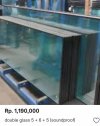
Another option is perhaps ... safety glass panels? Not so crazy idea. Glass is even a better soundproof material. 100% good result. Heavy though and more expensive.

Another option is just move ...
 

Attachments

  • Screenshot_20240313_155235_Chrome.jpg
    Screenshot_20240313_155235_Chrome.jpg
    53 KB · Views: 173
Last edited:
Huh, don't buy stuff at ACE Hardware for this. Go to Depo Bangunan.
During Covid-19, I heard, some stores closed in Jakarta. There is one left.
Couple of weeks ago I tried to find some sewer pipes and connections in the store in Jakarta, but compared to the one in Tangerang the store in Jakarta is smaller.

Local waterproofing product is Damdex, but my experience with this product is not good. Same applies to Aquaproof. Not so good.

Thanks a lot for the lead, @Samoerai, I'll check out Depo Bangunan.

Would you be able to elaborate on your 'not so good' experience? They don't last, they don't work at all, difficult to apply, etc.? My concern was the curing speed (usually 2 days) in this humid climate, hence I thought a local product would already have these things worked out.
 
Thanks a lot for the lead, @Samoerai, I'll check out Depo Bangunan.

Would you be able to elaborate on your 'not so good' experience? They don't last, they don't work at all, difficult to apply, etc.? My concern was the curing speed (usually 2 days) in this humid climate, hence I thought a local product would already have these things worked out.
As with most Indonesian products, no quality. Damdex is not good at waterproofing.
Aquaproof is better, but in this climat it doesn't last. It will crack, is my experience. Applying aquaproof it is recommended to use a brush, but it's better to use a 'roller' on a wall.
 
I changed out my roof from wood beams to aluminum about 10 years ago and retiled the whole roof with the normal terracotta tiles.

My house has timber roof truss with terracotta tiles, never had a leak more than 20 years later. But I noticed there is a layer of rubber sheeting underneath the roof tiles, for waterproofing I suppose.

Terracotta roof tiles are itself good soundproof material as it dampens rain noise. It is also cooler for the home compared to metal roof sheets.

By the way, are you sure your beams are aluminum? Never heard of aluminum being used as roof truss. Could it be Galvalume or Baja Ringan in Indonesian? Galvalume is actually steel coated with zinc and aluminum. It can get rusty, and needs replacement after some years. One way to check is by using magnet, if it is non-magnetic, then it is aluminum.

Whether it's aluminum or Baja Ringan, the support structure has to be "way over the top" (as you said) because terracotta tiles are very heavy, unlike metal roof sheets.
 
Last edited:
I think i could ask so many questions to this group but let me just ask about one of my biggest ones: Sound insulation, roof and leaks. Sorry for the long post.

I changed out my roof from wood beams to aluminum about 10 years ago and retiled the whole roof with the normal terracotta tiles. As sometimes happen here there was major drama with the company i chose to do this and they disappeared half way through after receiving one of the staggard payments. I finished it by paying a mix of workers directly but what i now have is a roof that only leaks a very little bit and an aluminum support structure that is way over the top and probably has double amount of support that i need (i presume thats not a bad thing).

I can handle fixing the occasional leaks but what id really like to do is to add soundproofing to the roof and im afraid to do that when there are any leaks at all. Most soundproofing options i hear about is rockwool and im worried it would just soak up (and hide) any leak until it go heavy enough to fall through the ceiling.

Anyone have any suggestions? I could probably get the whole roof re-tiled but is it possible to be 100% leak free here? Is there a different tile material that would offer better soundproofing alone?
Your roof is probably from baja ringan (galvanized light steel). You can isolate with buble aluminium, but be aware that buble aluminium roll is flamable. Price is quite cheap.

In my project, I reconditioned the old wooden roof, kept the galvanized zinc plating, and above the plating and below the tiles I put aluminum bubble roll in 2 layers, to have air ventilation. I sprayed the old wooden beams with fire retardant. The roof insiude the construction is ventilated with one window.

In the ceiling, above the gyptiles I put 5mm poliurethane-aluminum roll, unflamable, also used for covering/isolating car hoods. In the part where I have gyps ceiling only, I put 10 cm of glasswool. Rockwool is pretty expensive. Rockwool and glasswool will not hide any leak-the leak will show after some time on the wall or ceiling.
 
Last edited:
Your roof is probably from baja ringan (galvanized light steel). You can isolate with buble aluminium, but be aware that buble aluminium roll is flamable. Price is quite cheap.

In my project, I reconditioned the old wooden roof, kept the galvanized zinc plating, and above the plating and below the tiles I put aluminum bubble roll in 2 layers, to have air ventilation. I sprayed the old wooden beams with fire retardant. The roof insiude the construction is ventilated with one window.

In the ceiling, above the gyptiles I put 5mm poliurethane-aluminum roll, unflamable, also used for covering/isolating car hoods. In the part where I have gyps ceiling only, I put 10 cm of glasswool. Rockwool is pretty expensive. Rockwool and glasswool will not hide any leak-the leak will show after some time on the wall or ceiling.
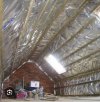
Something like this?
Is it soundproof?
 

Attachments

  • Screenshot_20240313_152453_Chrome.jpg
    Screenshot_20240313_152453_Chrome.jpg
    105.8 KB · Views: 144
@Loki also check Mitra10

@Ruserious I would look for an option as suggested before using bubble wrap or this kind of flexible foam material sandwiched between 2 aluminium foils. If you buy from a reputable brand and get it installed properly (example: it MUST sag between the rafters to have full insulation properties), they are fireproof and rather effective.

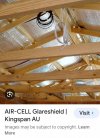
Check out Aircell Glareshield and Aircell Insulbreak from Kingspan Australia. They should have a distributor in Indonesia with their own installers.

Insulbreak, notably, is also a sound damper.

This product is used in NT and QLD so should be fine for Indonesia.

I would stay away from fiber type insulation for the reasons mentioned: soaking up leaks until catastrophe and providing a nest habitat.

Lastly, do make sure there is enough ventilation in your ceiling space (between ceiling and roof) for further insulation.
 
@Loki also check Mitra10

@Ruserious I would look for an option as suggested before using bubble wrap or this kind of flexible foam material sandwiched between 2 aluminium foils. If you buy from a reputable brand and get it installed properly (example: it MUST sag between the rafters to have full insulation properties), they are fireproof and rather effective.

Check out Aircell Glareshield and Aircell Insulbreak from Kingspan Australia. They should have a distributor in Indonesia with their own installers.

Insulbreak, notably, is also a sound damper.

This product is used in NT and QLD so should be fine for Indonesia.

I would stay away from fiber type insulation for the reasons mentioned: soaking up leaks until catastrophe and providing a nest habitat.

Lastly, do make sure there is enough ventilation in your ceiling space (between ceiling and roof) for further insulation.
Interesting ... but I doubt it is soundproof. Maybe a bit?
 

Attachments

  • Screenshot_20240313_211131_Google.jpg
    Screenshot_20240313_211131_Google.jpg
    87.6 KB · Views: 183
  • Screenshot_20240313_211523_Google.jpg
    Screenshot_20240313_211523_Google.jpg
    72.6 KB · Views: 165
Last edited:
Something like this?
Is it soundproof?
In one part I put like this, but not where the tiles arw..

In the rooftile area, I installed the bubble aluminium foil in 2 layers, as this guy, making radiant barrier like in the video on 3.58. Every layer of everything adds to soundproofing btw.

 
Check out Aircell Glareshield and Aircell Insulbreak from Kingspan Australia. They should have a distributor in Indonesia with their own installers.

Insulbreak, notably, is also a sound damper.
Probably good, but Insulbreak is 10 million Rp for 45 sqm roll in Indonesia
 
Last edited:
Interesting ... but I doubt it is soundproof. Maybe a bit?
It dampens the sound but is not sound proofing material. So yes, it does reduce the sound.

Probably good, but Insulbreak is 10 million Rp for 45 sqm roll in Indonesia

You get what you pay for. This is a product that is in line with the Australian building code, so you can be sure that its advertised performance is real and that it is safe.

That said, perhaps if it's bought from Depo Bangunan (I remember seeing it there years ago) it's going to be quite expensive. But if bought from the official distributor (which used to be a company that could also do the roofing but I completely forgot their name), it could be cheaper . Best is to call the head office in Australia and find out. HQ is in Perth.

Then again, if I was in this position and price was an issue, I would go for simple foil like you suggested, with proper roof space ventilation, over using rockwool for the reasons I mentioned before.
 
It dampens the sound but is not sound proofing material. So yes, it does reduce the sound.


You get what you pay for. This is a product that is in line with the Australian building code, so you can be sure that its advertised performance is real and that it is safe.

That said, perhaps if it's bought from Depo Bangunan (I remember seeing it there years ago) it's going to be quite expensive. But if bought from the official distributor (which used to be a company that could also do the roofing but I completely forgot their name), it could be cheaper . Best is to call the head office in Australia and find out. HQ is in Perth.

Then again, if I was in this position and price was an issue, I would go for simple foil like you suggested, with proper roof space ventilation, over using rockwool for the reasons I mentioned before.
The question actually was about soundproofing the roof. I doubt that this product will do the job.

Soundproofing a wall or a roof is really something else than sound dampening. I did soundproof a wall and a roof in Holland with rockwool. But I made some mistakes and learned from that.
 
Last edited:
The question actually was about soundproofing the roof. I doubt that this product will do the job.

Soundproofing a wall or a roof is really something else than sound dampening. I did soundproof a wall and a roof in Holland with rockwool. But I made some mistakes and learned from that.
Right, indeed I got side tracked into thermal insulation but I do know that when this AIRCELL product is used under a roof, it has sound dampening properties.

Rockwool is a good product obviously, but I think @Ruserious is right to be worried about it absorbing water and used as nest.
 
Right, indeed I got side tracked into thermal insulation but I do know that when this AIRCELL product is used under a roof, it has sound dampening properties.

Rockwool is a good product obviously, but I think @Ruserious is right to be worried about it absorbing water and used as nest.
Yes, bases on my experience. If I need to soundproof a wall or a roof in Indonesia, I would somehow try to use safety glass panels. Double glass is the best soundproof material by far.
 
It dampens the sound but is not sound proofing material. So yes, it does reduce the sound.


You get what you pay for. This is a product that is in line with the Australian building code, so you can be sure that its advertised performance is real and that it is safe.

That said, perhaps if it's bought from Depo Bangunan (I remember seeing it there years ago) it's going to be quite expensive. But if bought from the official distributor (which used to be a company that could also do the roofing but I completely forgot their name), it could be cheaper . Best is to call the head office in Australia and find out. HQ is in Perth.

Then again, if I was in this position and price was an issue, I would go for simple foil like you suggested, with proper roof space ventilation, over using rockwool for the reasons I mentioned before.
Australian building code is for houses in desert where the temperature is 60 degrees. Little bit over the top for Indonesia (European or US materials are more appropriate probably). Also many poliurethane aluminum layered insulation foils if you want more insulation.
 
BUT: it's the structural integrity of the rebar that still worries me. Not being an engineer, the act of casting the concrete on site (versus using precast reinforced concrete or steel beams) seems to be much less sound...but, as I wrote, I'm not an engineer.

Thanks again - if/when I learn anything from these developers I'll post the information to this thread.
Cast-in-place beam is not always weaker than precast beam. It depends on the formula of the mixture which define the quality of the beam after it dries for at least 28 days (strenght against pressure quality = mutu beton). For example mutu beton K250 = 250kg/cm², K300=300kg/cm² etc.
It also depends on the size of the beam which is calculated from the distant of two columns and the size of the columns themselves.

It happens often that the developer pushes the contractor to finish the jobs as soon as possible so they can present the house (& get the money) quicker. In that case, probably the contractor will cut down the cure time of the concrete.
 
Cast-in-place beam is not always weaker than precast beam. It depends on the formula of the mixture which define the quality of the beam after it dries for at least 28 days (strenght against pressure quality = mutu beton). For example mutu beton K250 = 250kg/cm², K300=300kg/cm² etc.
It also depends on the size of the beam which is calculated from the distant of two columns and the size of the columns themselves.

It happens often that the developer pushes the contractor to finish the jobs as soon as possible so they can present the house (& get the money) quicker. In that case, probably the contractor will cut down the cure time of the concrete.
Cast in place is not good in many places of Indonesia because the quality of the sand is inferior and often with mud or salty (West Java, Jakarta etc) . This often leads to cracks. Where the sand is good, or volcanic (Bali, Yogyakarta) the quality of the casting with traditional methods can be pretty good.

Curing goes fast with accelerators and aditives.
 

Users who viewed this discussion (Total:0)

Follow Us

Latest Expat Indo Articles

Latest Tweets by Expat Indo

Online Now

No members online now.

Newest Members

Forum Statistics

Threads
6,596
Messages
110,898
Members
3,881
Latest member
Nina
Back
Top Bottom